This article contains affiliate links. We may earn a commission if you make a purchase through our links, at no extra cost to you.
Key Takeaways
- Filtering, not blocking. A filtering plug lowers volume across the frequency range so speech stays intelligible. A foam plug cuts the high frequencies hardest — where the information in speech lives.
- Fit decides everything. Five of the six picks list an XS tip, and a plug that does not seal does almost nothing.
- There is a hard age floor. ASHA tells parents to use earmuffs rather than earplugs with young children, because earplugs can be a choking hazard. Every children's pick below is rated 5+ or 6+ by its maker; the two adult Loop models publish no age rating.
- The $34.95 premium does not buy decibels. Loop Engage Kids 2 is 16 dB SNR by Loop's own figure; the $13.29 LenRible states 27 dB.
- Loop Quiet 2 is the deliberate exception — a blocking plug for sleep, wrong for a classroom.
- Six picks, $13.25 to $34.95 as of September 2026, each with its limitation stated.
For most sensory-sensitive children the right earplug is a filtering one — a silicone plug with an acoustic channel that lowers the volume of the room while leaving a teacher's voice intelligible — not a foam plug that blocks everything. Blocking has a place, and one pick below is a blocking plug. That place is a bedroom, not a maths lesson.
The need is not niche. According to the 2021 meta-analysis by Williams, Suzman and Woynaroski in Ear and Hearing, indexed on PubMed, which included 67 studies, the pooled analysis of interview and questionnaire measures (13,093 autistic participants) estimated current prevalence of hyperacusis — reduced tolerance to sound — at 41.42% (95% credible interval 37.23 to 45.84%), with lifetime prevalence of 60.58%. The smaller set of studies using objective or observational measures gave a current estimate of 27.30%. For the wider picture of noise sensitivity in autism and ADHD, see our pillar guide.
Filtering vs. Blocking: The Distinction That Decides Everything
Both kinds make a room quieter, but the shape of the attenuation matters more than its size. According to Patricia Niquette of Etymotic Research, writing in The Hearing Review, traditional earplugs produce "unbalanced attenuation (15 to 20 dB greater attenuation for high frequencies than for low frequencies)", a "treble deficiency" that makes "music and voices sound muffled and unclear".
That tilt is the whole problem in a classroom. The consonants carrying most of the information in English speech — the s, f, th and k sounds — live in the high frequencies. A plug that eats the highs hardest strips out exactly the part of the teacher's voice separating "fifteen" from "fifty". The child still hears that someone is talking, but not what was said, so they stop following the lesson or pull the plugs out.
A filtering plug is engineered to avoid that tilt. Niquette describes flat attenuation as "an equal reduction in sound across frequency", achieved by "re-introducing a resonant peak in the earplug response to simulate that of the average normal open ear", so that "sound has the same quality as the original, only quieter" — and, she notes, because people hear clearly through them they are "more likely to wear them correctly".
One caveat: none of the makers below publish a frequency response curve for these models, so "filtering" on a box is design intent, not a figure their published specs let you check.
How to Choose Filtering Earplugs for Kids
Five things, in rough order of how often they go wrong.
1. Tip size, the number one failure mode
Many earplugs bought for children are adult plugs with an adult tip fitted, and a tip too large for the canal will not seal. According to Marcoux and Hansen in Trends in Amplification (full text on PMC), ear canal dimensions change rapidly "during the first 20 months of life and continue until the age of approximately 5 years", after which the canal "has almost come to its final dimensions and is therefore acoustically equivalent to that of an average adult".
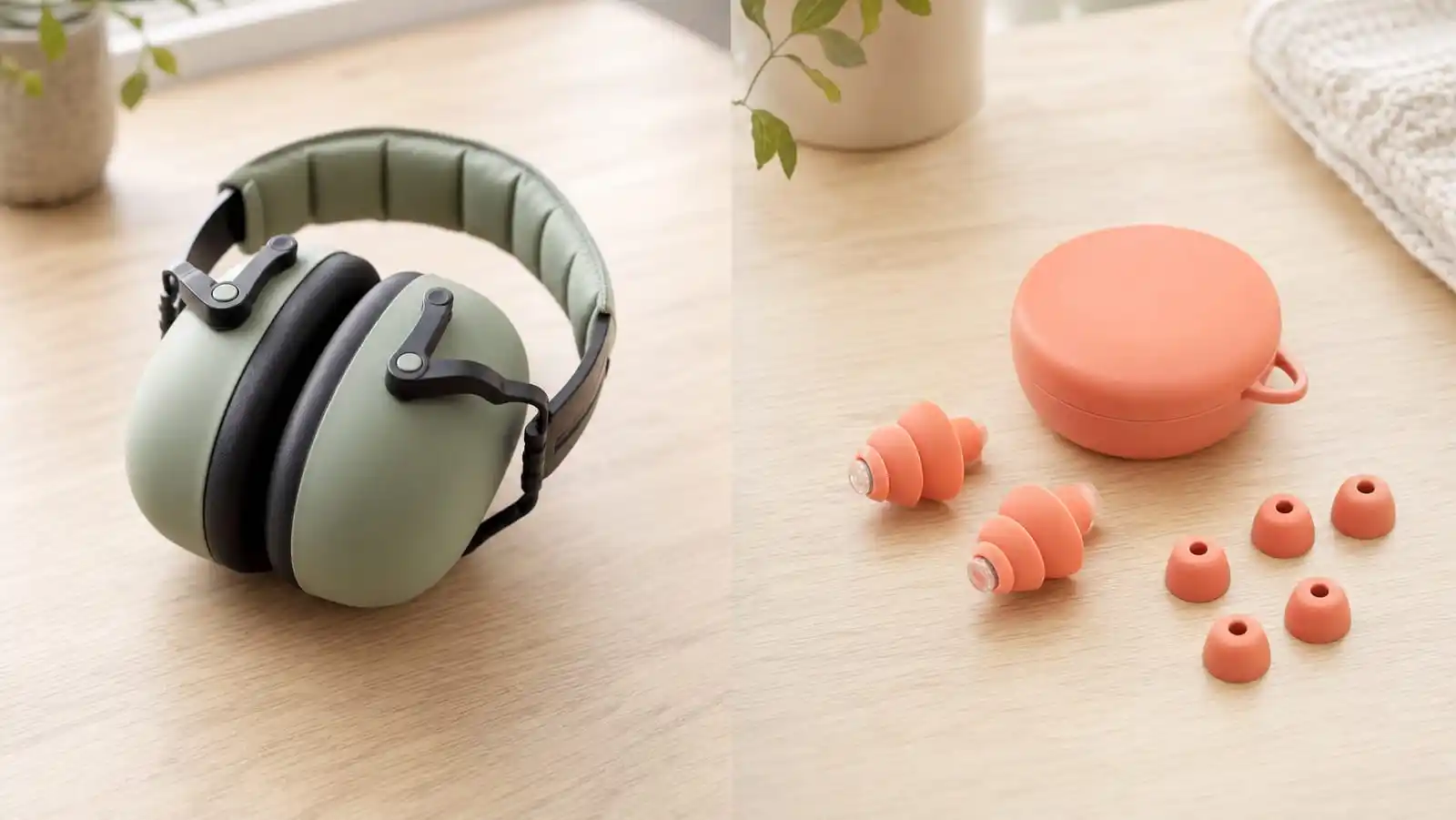
"Almost" is doing real work there. A nine-year-old's canal sits at the small end of the adult range, not the middle — which is why five of the six products here list tips down to XS, and why the two adult Loop models (Experience 2 and Quiet 2) arrive with the mid-size M tip fitted, which most children will need to swap out. Work down, not up.
2. The age floor is a safety rule, not a preference
In its guidance for parents, the American Speech-Language-Hearing Association states that "children should wear well-fitting earmuffs instead of earplugs, as earplugs can be a choking hazard for young children". The hazard is documented: a 2016 report in Medicine (Baltimore) (PMC5008585) describes a 7-month-old girl who developed a small bowel obstruction after swallowing a foam earplug and needed a laparotomy, the authors noting that foam earplugs "can be potentially hazardous objects to children".
Earplugs are a choking hazard for young children
The four children's products here are rated by their makers for ages 5+ or 6+; the two adult Loop models publish no age rating and are included here for teens. We do not recommend earplugs of any kind below school age. For toddlers and preschoolers use over-ear defenders, which sit outside the canal and cannot be swallowed. Store plugs in their case, away from younger siblings.
3. Retention, because the real cost is replacement
A $13 pair lost in week three costs more per wear than a $35 pair kept two years. Look for a connecting cord, a keychain case or a carabiner.
4. Telling a correct insertion from a bad one
- Look from the front. According to Loop, its earplugs should not stick out from the front of the ear when inserted correctly, and Softvox says the same of its tips sitting flush. A plug standing proud is not seated.
- Ask the child to say their own name. A seated plug usually produces the occlusion effect: their own voice sounds louder and more internal. Treat it as a rough check rather than a test — the effect is strongest with shallow insertion — but no change at all often means no seal.
Check each ear separately — children often seat one well and one badly, then report that earplugs "do not work".
5. What the number on the box does not promise
SNR is a laboratory figure, measured on trained adult subjects fitting the device correctly. Real-world attenuation is generally lower: NIOSH says a manufacturer's noise reduction rating "often does not reflect the actual protection provided" for the individual wearing it. The gap widens with a rushed morning and a tip one size too big.
Be clear which problem you are solving. According to CDC NIOSH, the recommended exposure limit for occupational noise is 85 A-weighted decibels over an eight-hour shift, and for each 3 dBA increase NIOSH recommends halving the exposure duration. Most of what distresses a sensory-sensitive child sits well below that. Both problems are real; only one is what these plugs are mainly for.
The Picks
All six were verified in stock on 23 September 2026 at the prices shown. We have not lab-tested them: specs come from the makers' listings, and where no attenuation figure is published we left the number out.
1. Loop Engage Kids 2 — Best overall for ages 6-12
Loop Engage Kids 2 — $34.95 as of September 2026. For a parent who wants one decision made.
- Loop publishes 16 dB (SNR) of noise reduction on its own product page, along with ages 6+ and a wear time of 90-minute sessions, up to three hours a day; the Amazon listing states 6-12 years
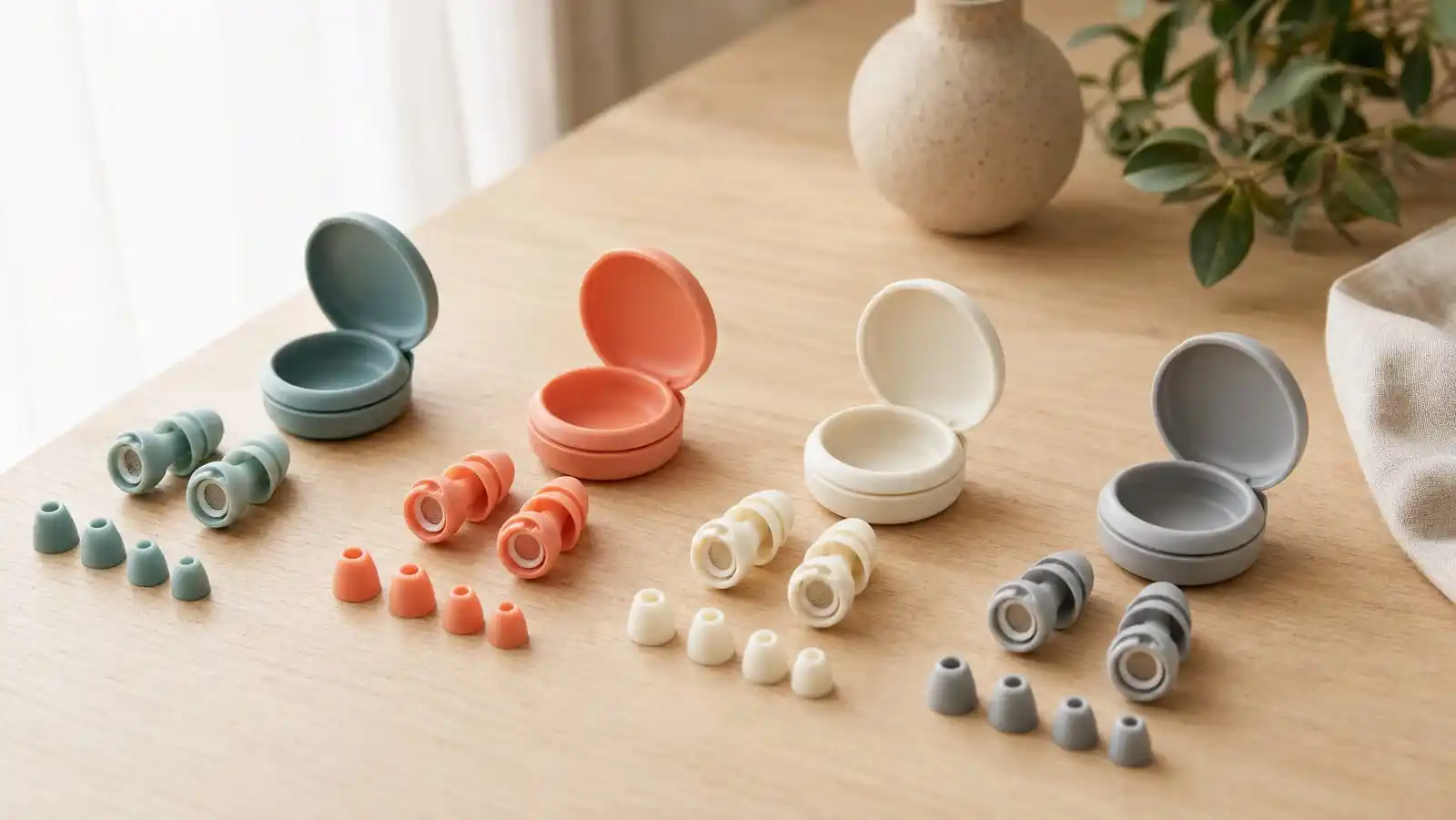
- Four kid-sized tips (XS, S, M, L) with S pre-installed — the only pick whose listing states that a small tip comes fitted
- One set of earplugs, four sets of tips, a keychain case; reusable and easy to clean
- According to Loop, they filter background noise while keeping speech clear, are marketed for overstimulation in loud places, and are described by the maker as certified hearing protection
The limitation: the lowest published figure here at the highest price — more than two and a half times the LenRible for less stated attenuation. That is the design, not a fault: a child who needs to hear the lesson should not be wearing 27 dB. But if the trigger is a fire alarm rather than chatter, this is the wrong model, and Loop's three-hour daily ceiling rules out all-day use. Check the current price on Amazon.
2. Softvox Kids Ear Plugs for Ages 6+ — Best budget pick
Softvox Kids Ear Plugs for Ages 6+ — $13.25 as of September 2026, list $13.95. The cheapest way to find out whether your child tolerates anything in the canal.
- Ages 6 and up; the maker says they also fit teens and adults with small ear canals
- Four interchangeable tip sizes (KXS, KS, KM, KL) in ultra-soft silicone
- A long silicone connecting string that splits apart, plus a carry case
The limitation: Softvox publishes no decibel figure for this model, so nobody — including us — can tell you how much sound it removes. The maker also states that they are "not intended for professional or extreme high-decibel hearing protection". Buy these to test tolerance, not to protect hearing at a motorsport event. Check the current price on Amazon.
3. Softvox Kids Ear Plugs 25dB, 2 Pair — Best two-pack for home and school
Softvox Kids Ear Plugs (6-12 yrs), 25dB, 2 Pair — $13.99 as of September 2026. One pair in the school bag, one at home.
- 25 dB, as stated in the maker's product title
- 6-12 years, petite sizing; also offered for teens and adults with smaller canals
- Soft silicone tips that sit flush without sticking out when fitted correctly
- According to Softvox, they filter background noise without distortion while keeping speech clear; the maker calls them certified hearing protection
The limitation: 25 dB is a lot of attenuation to pair with a claim of preserved speech clarity, and no frequency data supports it. If your child needs to follow a teacher, start lower and keep these for assemblies and travel. No tip-size breakdown is listed, so a child at the XS end may prefer pick 4.
4. LenRible Kids Ear Plugs — Best for very small ear canals
LenRible Kids Ear Plugs for 5-12 Yr — $13.29 as of September 2026, list $13.99. The lowest age rating here, and the fullest kit for the money.
- 27 dB noise reduction, as stated by the maker — the highest figure in this guide
- Ages 5 and up, plus teens and adults with smaller ear canals
- Four interchangeable silicone tips (XS, S, M, L), a carry case and a carabiner — a case clipped outside a backpack gets used; one at the bottom does not
The limitation: 27 dB is the most aggressive attenuation here, and the maker's wording — that it reduces noise "without completely blocking nearby sounds" — is a claim about audibility, not intelligibility. Expect more muffling of speech than the 16 dB Loop, on a figure nobody has independently verified. Check the current price on Amazon.
5. Loop Experience 2 — Best for teens and adults
Loop Experience 2 — $34.95 as of September 2026. For a teenager who wants something that does not read as a medical device.
- 17 dB (SNR) of filtered noise reduction, stated by the maker
- Four tip sizes (XS, S, M, L) with M pre-installed; Loop notes the smaller tips suit smaller ears, and states they should not stick out from the front when inserted correctly
- One set of earplugs, four sets of tips, a keychain case
- According to Loop, they are designed for live events and lower volume while keeping sound crisp; the maker calls them certified hearing protection
The limitation: the M tip arrives fitted, the wrong starting point for younger wearers, and at $34.95 it costs more than two and a half times the $13.29 LenRible while stating 10 dB less attenuation (17 dB against 27 dB) — and just one decibel more than the same-priced Engage Kids 2. This is an adult product a teenager can borrow the sizing from; younger children should have the Engage Kids 2.
6. Loop Quiet 2 — Best for sleep and shutdown moments
Loop Quiet 2 — $24.95 as of September 2026. The deliberate exception in a round-up about filtering.
- Up to 24 dB (SNR), stated by the maker
- Lightweight silicone; Loop says it is comfortable for side-sleepers
- Four tip sizes (XS, S, M, L) with M pre-installed, plus a carry case
Quiet 2 is a blocking earplug, not a filtering one. It muffles broadly rather than lowering volume while preserving speech, and that is the point: falling asleep in a noisy house, the twenty minutes after a shutdown, a long flight. Loop markets it for sleep, focus and travel, and calls it certified hearing protection.
The limitation: do not send these to school. Anywhere your child needs to hear a teacher, a coach or a warning, a blocking plug degrades exactly what they need. It is also $24.95 for a single-purpose tool — and our guide to white noise machines covers the quieter-room approach instead.
Does the Loop premium buy anything measurable?
Not in decibels. Loop Engage Kids 2 is 16 dB SNR at $34.95; the LenRible states 27 dB at $13.29. The extra $21.66 buys a four-size tip range with the small tip pre-installed, a keychain case that survives a school bag, and published wear-time guidance. For a child who loses or chews through cheap pairs, reasonable. For a first trial, no.
What Earplugs Cannot Do
They do not change the underlying sensory difference. An earplug lowers the input. It does not alter how your child's nervous system processes what gets through, and it will not, on its own, stop a meltdown. Many families find a reliably available plug reduces how often a situation escalates — useful, and smaller than a cure. If you have not worked out the trigger yet, read why sound sensitivity happens first.
Some children cannot tolerate anything in the canal. For a child with tactile defensiveness, a silicone tip pressing on the canal wall is its own sensory assault, and sizing does not fix it. Switch category: the best noise-cancelling headphones for autism covers over-ear options that never touch the canal, and ear defenders versus earplugs works through the trade-off.
Hygiene needs a routine, and the risk is not zero. A 2025 case-control study in JAAD International (PMC12713313) patch-tested 75 people and found at least one positive or doubtful contact-allergy reaction in 28.9% of the 38 participants with otitis externa, against 2.7% of the 37 controls. That is an association in a small study, not evidence that earplugs cause infections — but reason enough to clean the tips and see a GP if your child reports itching, pain or discharge.
The best intervention is often not a product. A desk moved away from the air-conditioning unit, a pass out of the dining hall, a warning before the fire drill. Reducing noise at source costs nothing and is not worn. None of this is medical advice: if your child's sound sensitivity is worsening, painful, or worse in one ear, an audiologist should assess it.
Frequently Asked Questions
What age can a child safely use earplugs?
Not before school age. ASHA advises earmuffs rather than earplugs for young children because of the choking hazard, and the 2016 Medicine (Baltimore) case above shows why. The makers here set their floors at 5+ or 6+; below that, use ear defenders.
Can a child wear earplugs all day at school?
The maker of our top pick says no: Loop states Engage Kids 2 is wearable for 90-minute sessions, up to three hours a day. Use plugs for predictable pressure points — assembly, the dining hall, the bus — not from registration to home time. If your child wants them in constantly, raise it with an audiologist.
Do earplugs cause ear infections?
There is no good evidence that clean, correctly used earplugs cause infections, but poor hygiene and material sensitivity may increase risk. The JAAD International study above found a higher rate of contact-allergy reactions among people with otitis externa than among controls, in a sample of 75 — suggestive, not conclusive. Clean the tips, dry them before the case closes, and never push a plug past light resistance.
Are earplugs allowed during standardised testing?
Usually, but check your jurisdiction. According to the National Center on Educational Outcomes' 2023 review of state assessment policies, 47 states or jurisdictions permit noise reduction in some form: 14 as a universal feature open to any student, 25 as a designated feature, and 8 as an accommodation — which NCEO notes is generally available to students who have documentation on an IEP or 504 plan. Typical conditions: worn individually, not connected to any audio device, and already used routinely in class — an argument for introducing plugs well before test week.
How do you clean filtering earplugs?
Follow the maker's instructions; Loop describes its plugs as reusable and easy to clean, and Softvox lists its plugs as reusable. In practice: remove the tips, wash in warm water with a mild soap, rinse, and let every part dry fully before it goes back in the case. The failure mode is a damp tip sealed in a case overnight. Replace tips once they go slack, because a slack tip stops sealing.
Where to Start
Buying a first pair: start cheap and find out whether your child tolerates anything in the canal at all — the $13.25 Softvox 6+ pair exists for that experiment. If they do, and the setting is a classroom, Loop designs the 16 dB Engage Kids 2 to keep speech clear at lower volume. If the problem is sleep, Loop Quiet 2 is the blocking exception.
Size down before you size up, check both ears, and let your child take them out whenever they want — a plug they control is a plug they will wear. For the rest of our reviewed auditory sensory tools for autism and ADHD, start with the pillar guide.