This article contains affiliate links. We may earn a commission if you make a purchase through our links, at no extra cost to you.
Key Takeaways
- Usually a processing difference rather than a hearing difference. Research suggests the ear often registers the sound at ordinary volume; what happens after that is where children differ.
- Common in autism, but not universal and not diagnostic on its own. Published estimates run from roughly 43% to 70%, depending on the measure.
- Hyperacusis, misophonia and phonophobia are three separate problems. Naming the right one changes what helps.
- The same sound can be fine on Monday and unbearable on Tuesday. Anxiety, fatigue and accumulated load all move the threshold.
- Ear defenders are a tool, not a treatment. NHS guidance warns that constant hearing protection can worsen sound tolerance.
- Pain or a sudden change in tolerance is an audiology question, not a behaviour question.
The leading explanation is that noise sensitivity in autism is a processing difference rather than a hearing difference: the ear picks the sound up at ordinary volume, and the brain downstream amplifies it, flags it as important, and does not tune it out the way most brains do. The hand dryer is not louder for your child. It is more urgent, and it stays urgent.
The long answer is worth ten minutes, because what causes noise sensitivity in autism is genuinely unsettled science, and because the version you can explain at a parents' evening is the one that gets your child a seat away from the door. This explainer opens our series on noise sensitivity and auditory sensory tools.
What Auditory Hypersensitivity Actually Is
Auditory hypersensitivity means everyday sounds at ordinary volumes provoke discomfort, distress or avoidance that most people would not have. It is a reaction, not a measurement — which is why two children with identical hearing tests can have completely different days in the same classroom.
Sensory differences are not a side note here. Hyper- or hyporeactivity to sensory input is one of the DSM-5 diagnostic criteria for autism, as summarised by Autism Speaks, and hearing is among the senses most commonly reported as affected.
The numbers vary widely because the methods do. According to a cross-sectional study of 161 parents of autistic children aged 4 to 12, published via PubMed Central, 108 children (67.1%) were reported to have auditory hypersensitivity. A Finnish population sample of 4,397 eight-year-olds, also published via PubMed Central, recorded it in 42.9% of the autistic children — though only 28 children in that cohort had a diagnosis, so treat the exact figure with care. A state-of-the-art review of sensory phenotypes in autism, published via PubMed Central, puts it at "approximately 50–70% of individuals with ASD" showing atypical behavioural responses to environmental sounds.
What Causes Noise Sensitivity in Autism? Filtering, Habituation and Arousal
Nobody has closed this question. Research offers several overlapping explanations, each with partial support.
One leading explanation is failed habituation. Most nervous systems mute a repeated, harmless sound within seconds — the fridge hum disappears, the classroom fan disappears. In a small fMRI study of youth aged 9 to 17, published in JAMA Psychiatry and described by UCLA Health, autistic participants with sensory over-responsivity showed stronger responses in sensory-processing regions and in the amygdala, and "took much more time to get used to the stimuli — and to reduce their brain response." Autistic youth without over-responsivity showed stronger prefrontal-to-amygdala connectivity, which the researchers suggest helps damp that reaction down.
Read plainly: the sound keeps arriving as new, and the brain's threat-and-salience system keeps answering the door.
A second concerns gain and inhibition. That same review in PubMed Central places auditory hyper-reactivity within wider theories of altered excitatory and inhibitory balance in sensory pathways — the volume knob sitting too high because the braking system is weaker. Active research, not a settled account of any individual child.
A third is arousal and anxiety, which the next section covers.
Why we hedge so much here
Auditory hypersensitivity is well documented and poorly explained. Writing in ENT & Audiology News, audiologists note "a notable lack of evidence-based options for diagnosis and treatment" for decreased sound tolerance in autism. Anyone selling a single cause — or a cure — is ahead of the evidence.
Hyperacusis, Misophonia and Phonophobia Are Not the Same Thing
Audiologists group these under decreased sound tolerance, which a 2022 paper in the American Journal of Audiology defines as a negative reaction to a sound that does not cause a reaction in an average person. Underneath that umbrella sit three distinct patterns, described in ENT & Audiology News:
- Hyperacusis — moderate-intensity sound is perceived as excessively loud, painful or overwhelming. It tracks the acoustics: how loud, what frequency.
- Misophonia — excessive emotional responses to specific trigger sounds, often quiet and human: chewing, tapping, sniffling. Context and source matter more than volume.
- Phonophobia — marked fear or anxiety about certain sounds, or about places where one might occur. The dread arrives before the sound does.
The label matters because the strategies diverge. Hyperacusis at a fireworks display calls for attenuation. Misophonia at the dinner table calls for a seating change and a family conversation, and earplugs may do nothing at all. Phonophobia about the hand dryer calls for a graded plan, not a louder demand.
Why the Same Child Copes on Monday and Falls Apart on Tuesday
This is the most misread pattern in the topic. Sound tolerance is a threshold, and the threshold moves.
Anxiety is a large part of why. The same review in PubMed Central reports that hyper-reactivity is "most consistently associated with heightened anxiety, obsessive–compulsive traits, and emotional dysregulation, suggesting a bidirectional relationship in which increased sensory sensitivity amplifies anxiety and avoidance, thereby reinforcing hyper-reactivity itself." Sensitivity feeds anxiety; anxiety feeds sensitivity. A child braced for the fire alarm all morning has less capacity left for the blender at lunchtime.
Learned associations do the rest. An NHS leaflet on children's hyperacusis from Milton Keynes University Hospital notes that once sounds become linked with pain or discomfort, fear of those sounds can develop — which is how one bad experience with a balloon becomes a year of refusing birthday parties.
Add poor sleep, hunger, illness or an unfamiliar room, and Tuesday stops being mysterious. Nothing about the sound changed. The margin did.
Startle Versus Slow Build: Two Different Overload Patterns
These look similar from outside and need opposite responses.
The startle response is immediate: a smoke alarm, a dropped tray, a dog two feet away. Fast, physical, usually over within minutes once the child can get away from it. Unpredictability matters as much as volume — you cannot brace for what you did not see coming.
The slow build is cumulative. Forty minutes in a supermarket, a full school assembly, a swimming pool where noise bounces off tiles. Nothing in particular goes wrong, and then everything does. The National Autistic Society describes a "rumble stage" before a full meltdown, where distress shows as "signs of anxiety such as pacing, seeking reassurance through repetitive questioning or physical signs such as rocking or becoming very still" — and notes that intervening then can head off what follows.
That rumble stage is your actual window. Past it, reducing demands and input is the job; teaching and consequences are not.
What It Looks Like From Outside, and Why It Is Not Defiance
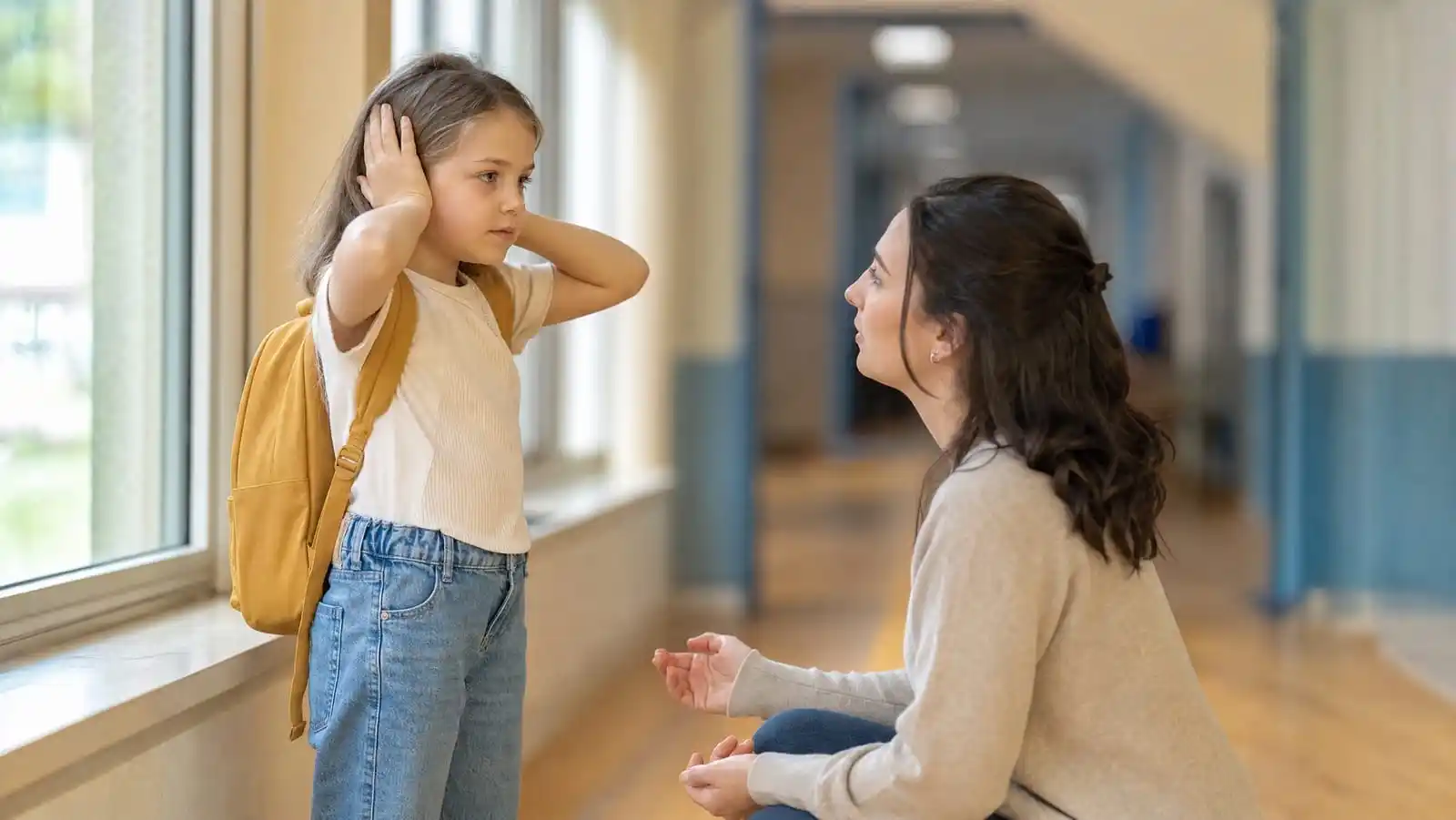
Sound distress rarely announces itself as "that is too loud for me." In the study of 161 parents published via PubMed Central, the reactions reported most often were difficulty sleeping (79.8%), difficulty concentrating (76.8%), hands over the ears (74.8%), nervousness (74.6%) and irritability (71.8%).
In practice it shows up as:
- Covering ears, humming, or making noise to mask the noise
- Bolting, hiding under furniture, refusing to enter one specific building
- Meltdown — or shutdown, where a child goes quiet, still and unreachable
- Looking like they are ignoring you
That last one matters. According to a 2023 study in Autism Research by Lau and colleagues, more than 70% of autistic children had caregiver-reported auditory processing differences — a measure that includes difficulty listening under noisy, real-world conditions — at ages 3, 6 and 9. A child who cannot separate your voice from the background is not refusing to listen.
And meltdown is not misbehaviour. The National Autistic Society is blunt: a meltdown "is not the same as a temper tantrum. It is not bad or naughty behaviour."
Noise Sensitivity in ADHD and SPD, Not Only Autism
Sound sensitivity is not exclusive to autism, and assuming it is delays help for many children.
In ADHD the evidence is thin but points one way. A 2020 study of 30 children with ADHD and 30 matched controls, published via PubMed Central, diagnosed hyperacusis in 11 children (36.7%) in the ADHD group versus 4 (13.3%) in controls — a statistically significant difference the authors themselves call preliminary. Sixty children is a small study, and one result is not a fact.
Children with sensory processing differences who are neither autistic nor ADHD sit in the same boat. In that Finnish sample published via PubMed Central, 3.3% of the 4,369 children without an autism diagnosis still showed auditory hypersensitivity — roughly one child per classroom, with no label attached.
So is noise sensitivity a sign of autism? It is a common feature and a reason to look closely, but on its own it is not a diagnosis.
Does It Change With Age?
Partly, and less than parents hope.
The NHS notes that children are often more sensitive to loud noises than adults and that it often gets better as they get older. Autism-specific data is more sobering: the 2023 Autism Research study by Lau and colleagues found auditory processing differences maintained a high prevalence through age 9, while symptoms in some other sensory domains were less common in older children.
The review in PubMed Central adds a wrinkle: some caregiver-based studies report hyper-reactivity easing with age, "whereas self-report data indicated that sensory discomfort often remains prevalent, though manifesting in more internalized forms such as fatigue or cognitive overload rather than overt behaviors." Older children stop covering their ears. That is not always the same as being fine.
When to Ask for an Audiology or OT Assessment
Sound sensitivity that shapes daily life is worth a professional opinion, and the first stop is usually a hearing assessment.
Ask for an audiology referral when:
- Sounds cause actual pain, not just distress. The NHS advises seeing a GP if everyday noises feel uncomfortably loud or cause pain, with onward referral to a hearing specialist.
- Tolerance changes suddenly or worsens sharply, or follows an ear infection or glue ear.
- One ear seems affected differently from the other.
Ask an occupational therapist when the issue is function rather than the ear: a child who cannot eat in the canteen, sit through assembly, sleep through household noise, or tolerate the bathroom. OTs assess across settings and build the plan around the situations that break down.
What an assessment can and cannot do
Hyperacusis is not a number on an audiogram. The Milton Keynes University Hospital leaflet puts it directly: it "is individual to the sufferer and, a bit like a headache, can't be tested or measured." A normal hearing test does not mean the problem is imaginary — it means the problem sits downstream of the ear.
What Actually Helps, Briefly
Full strategies belong in their own articles, but the shape of a good plan is consistent.
Predictability and control often matter more than silence. A warning before the vacuum, a visual schedule that includes the fire drill, permission to leave a room without asking.
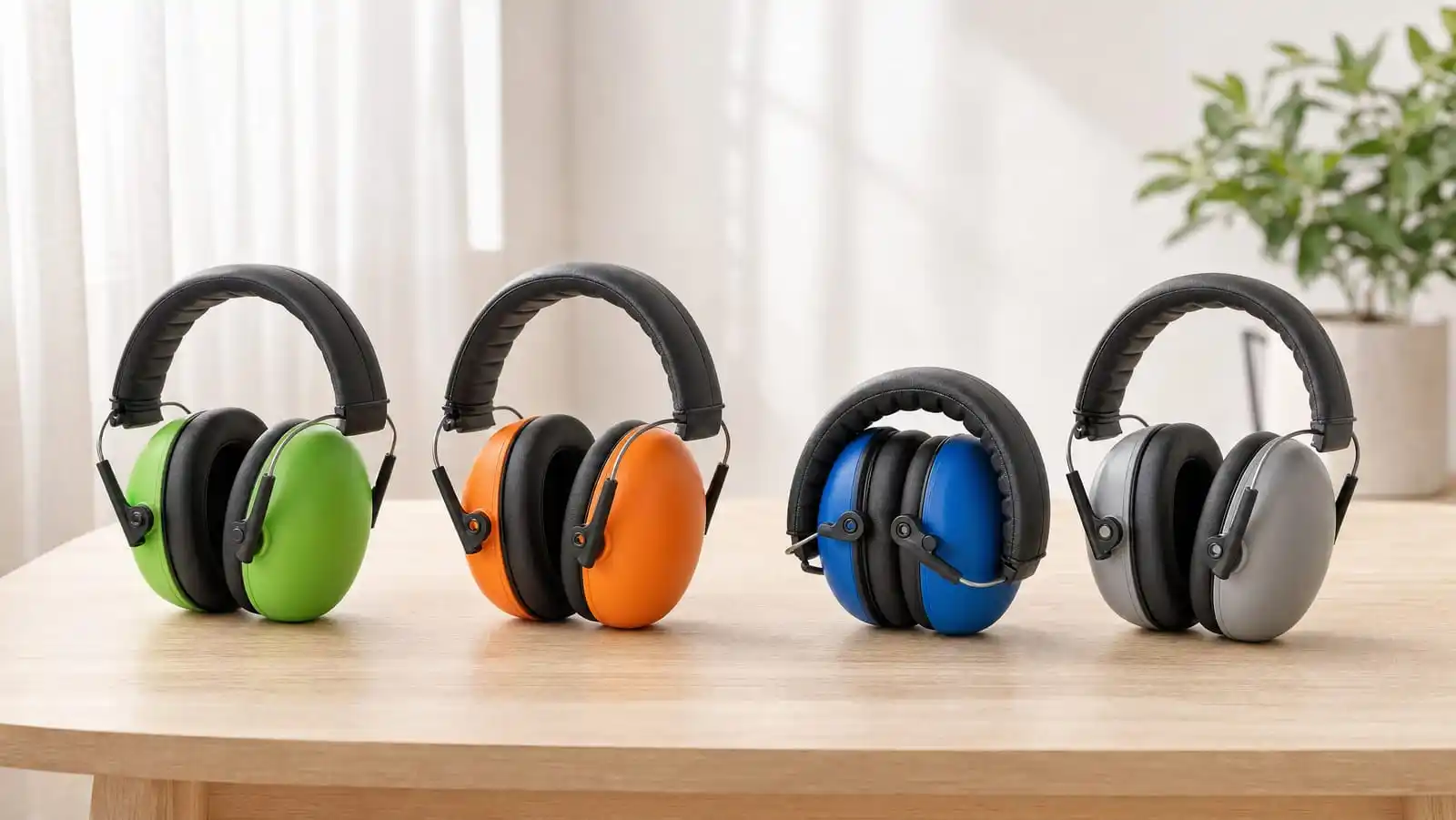
Attenuation, used surgically. Hearing protection earns its place at fireworks, assemblies and airports. The trade-off is real: the NHS advises against constantly wearing earplugs because it can worsen sensitivity, and the Milton Keynes University Hospital leaflet states that "the regular use of ear plugs, earmuffs or ear defenders must be avoided." Our guide to the best noise-cancelling headphones for autism covers how to choose a pair and, just as importantly, when to take it off.
Sound to cover sound, especially at night. Difficulty sleeping topped the parent-reported list above. Steady, low-level sound from white noise machines can help mask the unpredictable noises — plumbing, traffic, siblings — that jolt a sensitive sleeper awake. Softening the room helps too, the logic behind a sensory-friendly bedroom: rugs and curtains absorb the echo that hard rooms amplify.
Graded exposure, with professional guidance. The NHS leaflet describes playing a distressing sound at very low volume and raising it gradually over days or weeks — a desensitisation process the leaflet says takes many months — alongside relaxation and noisy activities the child controls. Done badly it is just forcing, which backfires. Do it with a clinician.
Frequently Asked Questions
Is noise sensitivity a sign of autism? It is strongly associated with autism but is not diagnostic by itself. A state-of-the-art review published via PubMed Central estimates roughly 50–70% of autistic people show atypical behavioural responses to environmental sounds — but sound sensitivity also occurs in ADHD, in children with sensory processing differences, and in children with none of these. Only a qualified clinician can diagnose autism.
What is the difference between hyperacusis and misophonia? Hyperacusis is driven by the sound itself — moderate-intensity sound perceived as excessively loud, painful or overwhelming. Misophonia is driven by specific trigger sounds, often quiet ones such as chewing, and produces an intense emotional reaction regardless of volume, as described in ENT & Audiology News.
Can a hearing test detect sound sensitivity? Not directly. A hearing test measures thresholds, and sound-sensitive children often have typical hearing. As the Milton Keynes University Hospital leaflet notes, hyperacusis "can't be tested or measured" the way a hearing loss can. The test still matters: it rules out ear problems that need treating.
Why does my child seem to ignore me in a noisy room? Because separating one voice from background noise is a specific skill, and it is commonly affected. The 2023 Autism Research study by Lau and colleagues found more than 70% of autistic children had caregiver-reported auditory processing differences, including difficulty listening under noisy real-world conditions, at ages 3, 6 and 9. Moving closer, getting visual attention first and cutting background noise beat repeating yourself louder.
The Bottom Line
Your child is not being dramatic, and you are not imagining the pattern. The most defensible reading of the evidence is that a sound-sensitive nervous system treats ordinary noise as more urgent and takes longer to let it go — a mechanism, not a choice, and one that shifts with anxiety, fatigue and load. That is the sentence to hand a teacher.
From here, our complete auditory sensory guide covers the tools, environments and routines that make loud places survivable. Start with the one situation that breaks down most often in your week.