This article contains affiliate links. We may earn a commission if you make a purchase through our links, at no extra cost to you.
Key Takeaways
- Autistic adults describe stimming as regulation. In a 2019 study of 31 autistic adults in Autism, participants called stimming "comfortable or calming" and "objected to treatment that aims to eliminate the behaviour".
- Visual fascination sits inside the diagnostic criteria. The DSM-5 sensory item gives "visual fascination with lights or movement" as an example.
- Sensory features are the norm. Of 25,627 autistic 4- and 8-year-olds in a 2022 US surveillance study, 74 percent had documented sensory features.
- Suppression has a measured cost, in adults. A 2024 meta-analysis of 16 studies and 5,897 autistic participants linked camouflaging to anxiety and depression — correlation only.
- Two exceptions are genuine: the eyes and the sun. Per the American Academy of Ophthalmology, looking at the sun unprotected, "for even a short time", can damage the retina permanently.
- A sudden increase is a medical question first. A Royal Children's Hospital Melbourne guideline tells clinicians to "assume the child with acute distress may have an underlying medical issue, until proven otherwise".
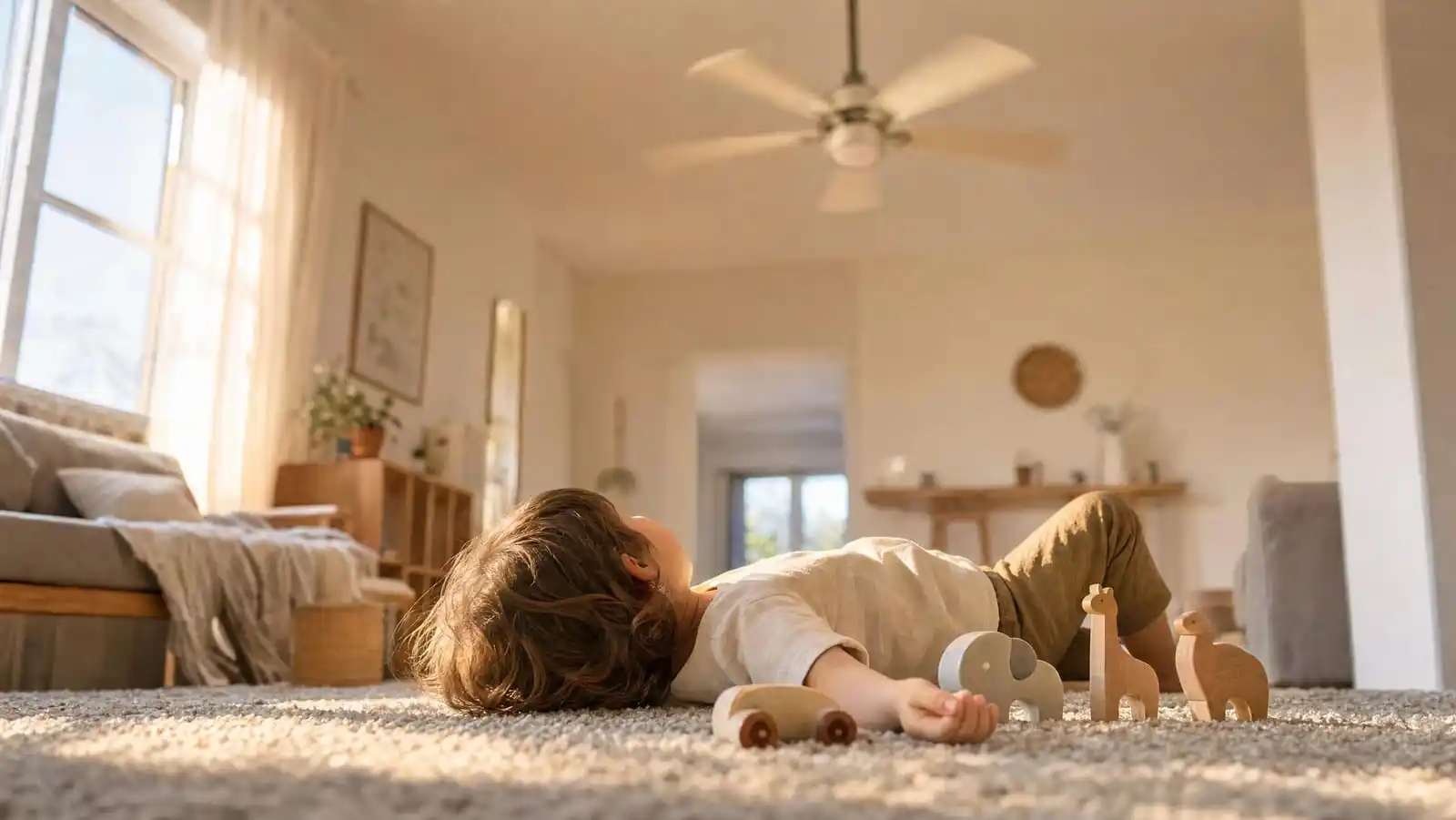
Visual stimming is self-regulation, not a symptom, and the useful question is never how to stop it — it is whether it is safe and what it is doing for your child. Staring at a ceiling fan, flicking fingers past the eyes, lining cars up and crouching to their level: these are things a nervous system does on purpose, and they are the seeking half of visual sensory input and light sensitivity.
That holds for nearly every visual stim. The exceptions are narrow, about harm rather than appearance, and have their own section below.
What Visual Stimming Looks Like
Visual stimming is repetitive behaviour whose payoff is something to look at:
- Peering at lights and ceiling fans, or flicking a switch.
- Finger-flicking or hand-flapping near the eyes, which chops the view into frames.
- Lining objects up, then crouching so the row is seen edge-on.
- Side-eyeing — looking from the corner of the eye, not head-on.
- Spinning things — wheels, lids, coins — and watching, not playing.
- Looping the same five seconds of video, rewound by hand, dozens of times.
- Staring at patterns or moving water — blinds, escalator treads, a running tap.
If you have ever watched a child hold a toy car an inch from one eye and roll the wheels back and forth for four minutes, you have seen the whole category at once.
This is not the behaviour from last week's explainer. A hood pulled over the eyes in a supermarket reduces visual input; a child on the floor watching the fan increases it. Opposite problems, same puzzled onlookers.
Why It Happens: Seeking, Not Breaking
Seeking is how a nervous system fetches the input it wants at an intensity it can use. The DSM-5 autism criteria, as published by the CDC for clinicians, include "hyper- or hyporeactivity to sensory input or unusual interest in sensory aspects of the environment", and list "visual fascination with lights or movement" among the examples. Flicking fingers past the eyes is not evidence something has gone wrong; it is one of the things clinicians look for.
In a 2022 analysis of US Autism and Developmental Disabilities Monitoring Network records by Kirby and colleagues in Autism Research (full text on PMC), covering 25,627 autistic 4- and 8-year-olds, "the majority (74%; 95% confidence interval: 73.5%-74.5%) of the children studied had documented sensory features". Read that carefully. It is one binary variable covering heightened sensitivity, diminished response and fascination together — a limitation the authors name — and "staring at lights" is its only visual example. How many autistic children stim visually, nobody has counted.
Regulation may run both ways, but only one direction is well evidenced. A stim is often calming — that is what Kapp's participants described, and the paper records that "None of the participants described instances of too little sensory input". Whether a stim can equally be alerting, waking up a flat and under-responsive morning, is a common clinical account that the published evidence does not settle.
And the same child can be visually seeking and light-sensitive. This is the part most often missed. Elwin and colleagues, studying sensory clusters in autistic and non-autistic adults in the Journal of Autism and Developmental Disorders (on PMC), state that "hyper- and hyporeactivity can co-occur in the same individual". A child who flinches at strip lights in assembly can still hunt for a lit object at bedtime — not inconsistency, and why light sensitivity happens covers the avoiding side.
Be sceptical of tidy numbers for seeking: a 2023 analysis by the Autism Sensory Research Consortium in Molecular Autism, pooling 3,868 autistic youth (on PMC), found the seeking and hypo-reactivity constructs "demonstrated substantial psychometric limitations" where hyperreactivity did not. Nor is seeking vision-only, which is why children who seek noise rather than avoid it reads as a near-mirror of this article.
What the Research Actually Says About Stopping Stimming
For decades the clinical default was to reduce stimming, because it looked different. The strongest counter-evidence came from asking autistic people.
Kapp and colleagues, in Autism in 2019 (full text on PMC), interviewed and ran focus groups with 31 autistic adults. Most "described stimming itself as comfortable or calming, suggesting a self-regulatory function". Participants "objected to treatment that aims to eliminate the behaviour", and the paper puts the ethics bluntly: "Seeking to extinguish functional stimming would violate the medical ethics of the principle to 'do no harm'." Suppression was not free either — those who "attempted to suppress their stims in public" "described depleting, effortful costs".
A 2024 meta-analysis by Khudiakova and colleagues in Research in Autism Spectrum Disorders (record at the University of Birmingham) pooled 16 studies with 5,897 autistic participants and found moderate positive relationships between camouflaging and anxiety, depression and social anxiety. The caveats matter as much as the result: the studies were underpowered for small effects, and the authors write that "longitudinal studies should also aim to establish causality".
And here is the gap we will not paper over. That literature is adults self-reporting social camouflaging, not children having visual stims blocked in class. We found no study measuring what happens to a seven-year-old when their finger-flicking is interrupted. The direction of the evidence is clear enough to act on; the experiment has not been run.
Professional guidance has moved the same way. The American Psychiatric Association's stimming explainer, published in December 2020, notes that autistic adults describe stimming as "primarily a self-regulatory mechanism" and reserves concern for behaviours that "can cause self-harm, such as head banging or excessive scratching at one's skin".
When Visual Stimming Needs a Closer Look
"A closer look" means an appointment, not a behaviour plan. Four situations qualify.
Eye-pressing, poking or hard rubbing. This is the one visual stim that risks the organ doing it, and it can signal that vision is already impaired. MedlinePlus Genetics, from the US National Library of Medicine, describes Franceschetti's oculo-digital sign — "poking, pressing, and rubbing their eyes with a knuckle or finger" — as "a characteristic feature of Leber congenital amaurosis", a retinal condition causing "severe visual impairment that occurs early in life", and notes that "poking the eyes often results in the sensation of flashes of light called phosphenes" — flashes from inside the visual system, which is why the habit is self-reinforcing. That does not make eye-pressing a diagnosis — it makes it an eye professional's question.
UCI Health reported in June 2025 on a 13-year-old autistic boy whose mother "thought her son might simply be exhibiting new 'stimming' behavior" when he began rubbing and tapping his eyes. He had severe cataracts in both eyes, removed in two operations.
Sun-gazing and eye-pressing: act now, not next term
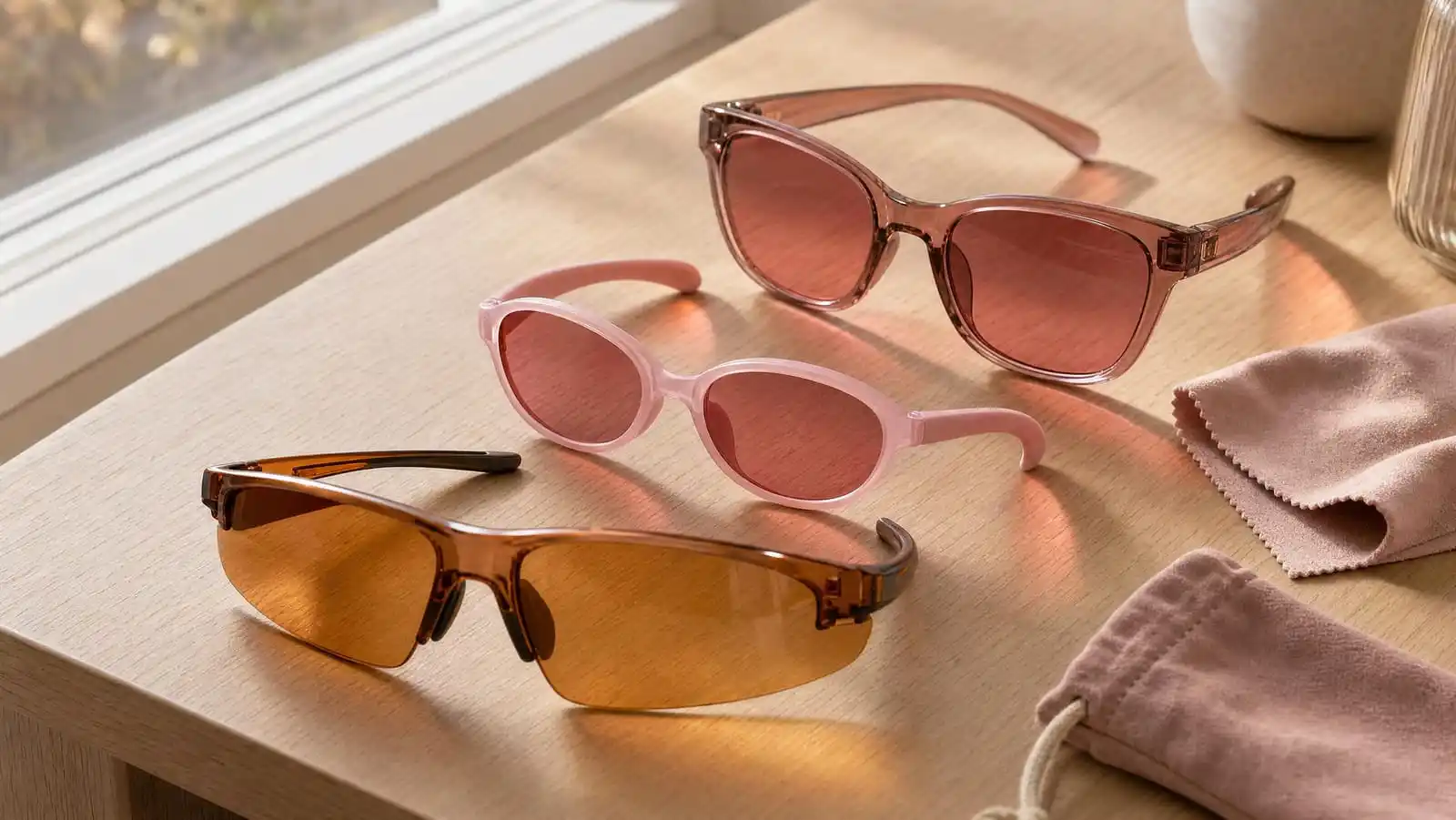
Looking at the sun is not a safe stim. The American Academy of Ophthalmology's solar eye safety guidance, reviewed by Russell N. Van Gelder, MD, PhD, states that "looking at the sun without the right eye protection — for even a short time — can damage your retina permanently" and that "it can even cause blindness, called solar retinopathy". A child who seeks the sun needs physical redirection and a safe bright target instead, today.
Eye-pressing needs an eye examination, not a behaviour chart. The UCI Health piece quotes paediatric ophthalmologist Donny Suh saying "it's especially important for kids with developmental delays to receive careful and comprehensive eye examinations". Vision loss in a child who cannot describe it may first show up as a change in behaviour.
A sudden change or sharp increase. A stim stable for years that triples in a fortnight may be reporting on something else: pain, illness, poor sleep, a change at school. The Royal Children's Hospital Melbourne guideline on distress in autism and developmental disability, last updated June 2022, tells clinicians to "assume the child with acute distress may have an underlying medical issue, until proven otherwise", to "consider underlying pain" and to "look for potential sources of infection".
Stimming that displaces everything else, or hurts. If a child cannot be drawn out of the stim to eat, sleep, move or be with people, or if it leaves marks, ask for occupational therapy — whose question is function, not appearance. Kapp's participants drew that line themselves: they "professed no desire for self-injurious stims".
Supporting It Instead of Stopping It
Substitution, not extinction — and it is what autistic adults describe doing for themselves. Kapp's participants reported "transmuting stims into a more socially acceptable form that provided similar feedback", one replacing arm stims with "dancing, shaking hands, tennis, chess and sailing". Match the feedback; do not remove it.
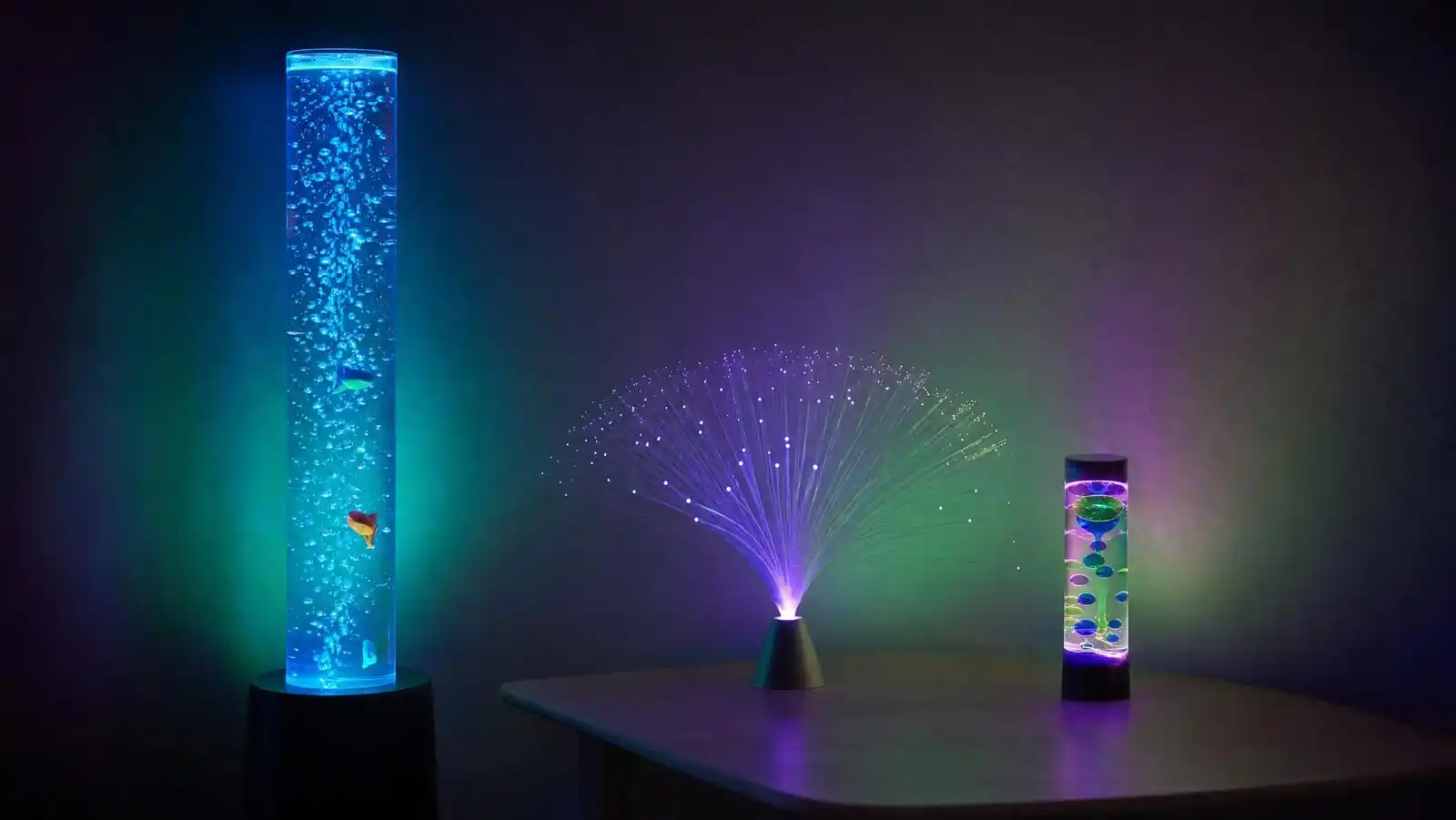
Work out what the stim provides. Sun-gazing is brightness and glare, so a bright diffuse source at a distance is closer than a quiet fidget. Eye-pressing is phosphenes, so a substitute has to be visually busy rather than calming. Our guide to the best visual stim toys sorts tools by the input they deliver, not by age label. No toy treats autism and none of this is therapy — it gives a child something safe to do the same thing with.
Build stim access into the day rather than rationing it. Ten minutes under the fan after school may cost less than needing it in the middle of maths — a scheduled refuel, not a privilege to withdraw. That is our judgement rather than a measured finding: we found no study comparing scheduled stim access with rationed access.
Keep flicker in proportion. Fan blades, strobing toys and sunlight through railings all produce flicker. The Epilepsy Society states that "around 1 in 100 people has epilepsy and, of these people, around 3% have photosensitive epilepsy", and that flicker "between 16 and 25 times a second" is most likely to trigger seizures. Epilepsy is also more common in autistic people: a 53-study review by Zarakoviti and colleagues in the Journal of Autism and Developmental Disorders (full text on PMC) found 7 percent of 257,892 autistic individuals "had co-occurring epilepsy", with only 9 of the 53 studies rated good quality. Both halves, please: a ceiling fan does not cause epilepsy, and most children who seek flicker are not at risk. But if your child has had an unexplained blank spell, jerk or collapse, raise it with your GP before buying anything that strobes.
What to ask school for
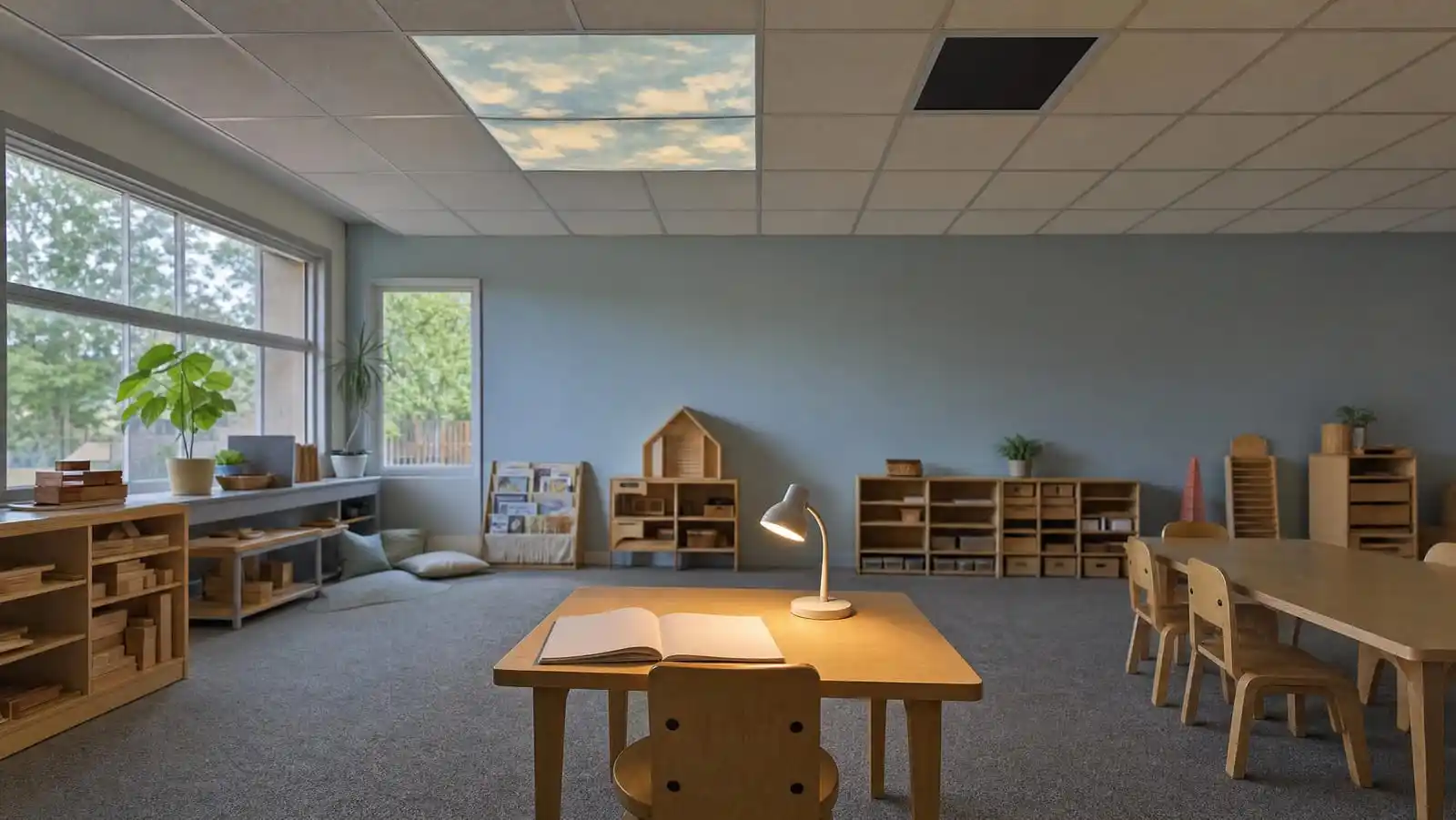
Not permission to stim — a place and a time: a named spot where stimming passes without comment, and a stim object that lives in the desk. The sentences that do the work in an email:
"Visual stimming is a self-regulation strategy, not attention-seeking, and the DSM-5 autism criteria list 'visual fascination with lights or movement' as an example of sensory difference. We ask only that it not be interrupted unless it is unsafe, and that an alternative be offered rather than a correction."
Ask for it in the one-page profile or IEP so it survives a change of teacher.
What to say to relatives. It is how she settles herself, it is in the diagnostic criteria, and stopping it costs her something. The APA's phrase — "primarily a self-regulatory mechanism" — does more at a family lunch than an argument about rights.
Frequently Asked Questions
Why does my autistic child stare at lights?
Most likely because the light supplies something they want: steady, predictable, high-contrast input they can control with a turn of the head. The DSM-5 criteria, per the CDC, name "visual fascination with lights or movement" as an example of "unusual interest in sensory aspects of the environment". Two caveats: if the light is the sun, stop it now, and if the staring is new, brief and comes with unresponsiveness, describe it to your GP.
Should I stop my child from stimming?
Not as a goal in itself. The 2019 Autism study of 31 autistic adults found stimming described as "comfortable or calming", and participants "objected to treatment that aims to eliminate the behaviour". The exceptions are harm-based: eye-pressing, sun-gazing, injury, or a stim that crowds out eating, sleeping and people.
Is hand flapping in front of the eyes a sign of autism?
On its own, no. The American Psychiatric Association lists "flapping hands or flicking or snapping fingers" among common stims, and notes that stimming "can also refer to repetitive actions that are common among people without autism". Autism is diagnosed on a pattern across social communication and repetitive behaviour, by a qualified clinician.
Do children with ADHD or SPD visually stim too?
Parents report it and the research has not kept up. Almost all published work on stimming comes from autistic samples — the 74 percent figure above is autism surveillance data. We found no comparable figure for ADHD, or for sensory processing differences without an autism diagnosis.
Conclusion
Your child is not malfunctioning when they watch the fan. The defensible reading of the evidence, and the one autistic adults report themselves, is that visual stimming is a regulation strategy doing a job — most clearly a calming one, and possibly an alerting one too.
Keep the exceptions short and act on them hard: eyes being pressed, the sun stared into, a stim that suddenly doubles, a stim that has eaten the day. Those four get an appointment; everything else gets a safer version and a place to do it.
For the other half of the picture — children who find ordinary light painful — our complete guide to visual sensory toys for autism and light sensitivity is the place to start. Pick the one stim that worries you most, and ask what it is giving your child before you ask how to stop it.