This article contains affiliate links. We may earn a commission if you make a purchase through our links, at no extra cost to you.
You Don't Need Thousands of Dollars for a Sensory Room
Here's what most parents don't realize: a functional sensory space can cost less than a nice dinner out. You don't need a Pinterest-perfect dedicated room with bubble tubes lining the walls. You don't need professional installation or clinic-grade equipment.
What you need is a calm space, some vestibular input, and a few elements tailored to your child's sensory profile. Everything else is optional.
We've seen parents create effective sensory spaces for under $100—and we've seen families with "fully equipped" rooms that their children never use because no one asked what the child actually needed.
This guide covers three budget tiers, from starter setups to complete sensory rooms. We'll show you how to add sensory swings and vestibular toys without breaking the bank, plus DIY alternatives for every price point. Whether you have an extra bedroom or just a corner of your living room, you can make this work.
What You Actually Need (vs. What's Nice to Have)
Full Room vs. Corner vs. Closet
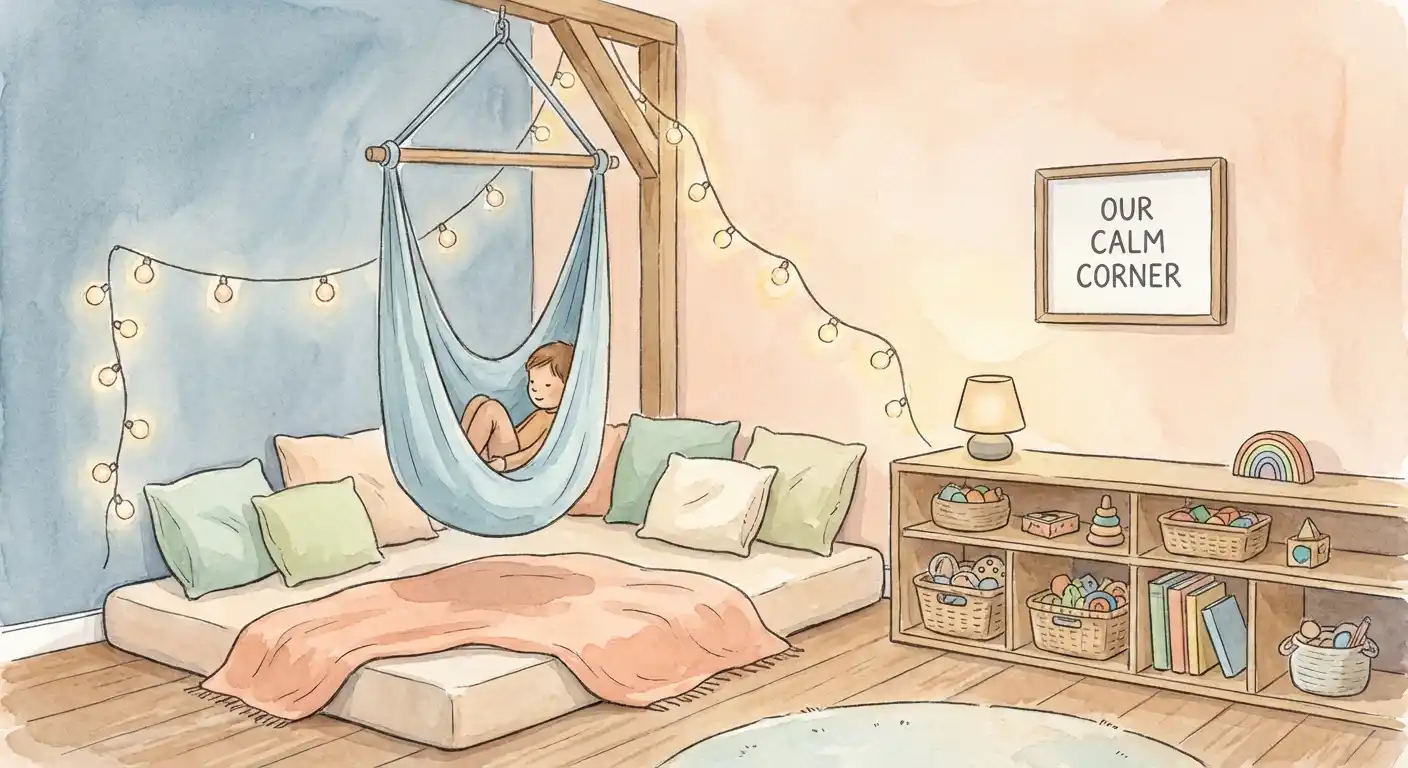
Not everyone has a spare room to dedicate to sensory needs—and that's perfectly fine. A sensory space can be:
- A full room: Ideal if you have the space, but not necessary
- A corner: Section off an area with curtains or a room divider
- A closet: Many families convert unused closets into cozy sensory nooks
- A wall: Wall-mounted equipment and floor cushions work in tiny apartments
Small spaces often work better because they feel enclosed and safe. A closet conversion with soft lighting and a small swing can be more calming than a large, echoing room.
Essential vs. Nice-to-Have
Essential elements (what actually matters):
- A designated calm space away from household chaos
- Vestibular input (swing, rocking, bouncing options)
- Proprioceptive input (crash pad, weighted items, compression)
- Calming lighting (soft, controllable)
Nice-to-have (add later if budget allows):
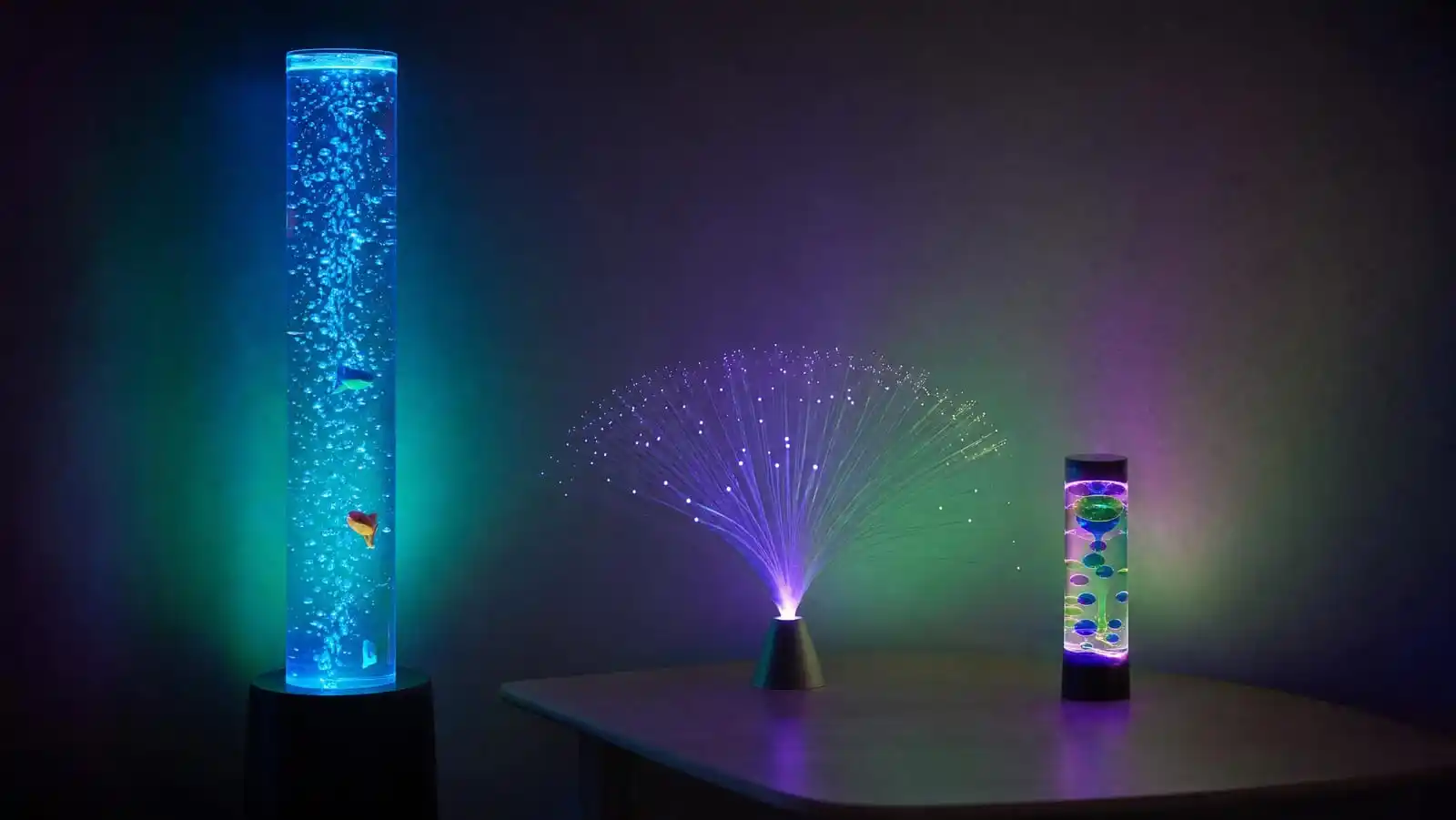
- Bubble tubes (~$120)
- Fiber optic lights ($50-100)
- Projection systems ($40-80)
- Sound systems with nature sounds
Start with the essentials. Add nice-to-haves one at a time based on your child's response.
Budget Tier 1: Under $100 (The Starter Setup)
This tier creates a functional calming space with basic sensory elements. Perfect for testing what your child responds to before investing more.
What to Buy
| Item | Cost | Purpose | |------|------|---------| | String lights or fairy lights | $10-15 | Soft, calming lighting | | Bean bag or large floor cushion | $20-30 | Comfortable base | | Fidget toys and stress balls | $10-20 | Tactile regulation | | Sensory bottles (DIY) | Under $10 | Visual stimulation | | Pillows and blankets | Free (use what you have) | Comfort and compression |
Total: $50-75
How to Set It Up
- Choose your space—a corner works perfectly
- Lay down pillows and blankets as a soft base
- Add the bean bag or floor cushion as the main seating
- Hang string lights at eye level or above (battery-operated avoids cord hazards)
- Place fidgets and sensory bottles in a small basket within reach
This basic setup provides visual calming (lights, bottles), tactile input (fidgets), and a cozy retreat space. It won't include vestibular equipment yet, but it establishes the foundation.
Adding Free Vestibular Input
While you save for a swing, provide vestibular input with zero cost:
- Rocking while seated on pillows
- Rolling back and forth on the floor
- Spinning in place with supervision
- Jumping on cushions or a mattress
For more ideas, see our guide to vestibular activities without equipment.
Budget Tier 2: Under $300 (Adding Vestibular Input)
This tier adds genuine vestibular equipment, making the space functional for daily sensory regulation.
What to Buy
| Item | Cost | Purpose | |------|------|---------| | Everything from Tier 1 | $50-75 | Foundation | | Budget sensory swing | $40-80 | Vestibular input | | Doorway bar for installation | $30-50 | Swing mounting | | Exercise ball (anti-burst) | $15-25 | Bouncing, balance | | Weighted blanket (child-sized) | $30-50 | Proprioceptive calming | | DIY crash pad | Free | Deep pressure, jumping |
Total: $165-280
The Swing Setup
A basic hammock-style sensory swing costs $40-80 on Amazon. The Aokitec Sensory Swing offers excellent value at this price point. For our full recommendations, see our list of best sensory swings.
For installation, a doorway swing bar ($30-50) is the most budget-friendly option that requires no permanent modification. These hold up to 200 lbs, install in minutes, and work perfectly for renters.
For detailed installation guidance, see our guide on how to install a sensory swing.
The DIY Crash Pad
This costs nothing if you have a large duvet cover:
- Find a queen or king-sized duvet cover with a zipper
- Stuff it with pillows, blankets, and large stuffed animals
- Zip it closed
- Place on the floor for jumping, crashing, and deep pressure
This provides proprioceptive input similar to commercial crash pads costing $100+.
Budget Tier 3: Under $500 (The Complete Setup)
This tier builds a fully functional sensory room with variety across sensory systems.
What to Buy
| Item | Cost | Purpose | |------|------|---------| | Everything from Tier 2 | $165-280 | Foundation + vestibular | | Higher-quality swing or second swing type | $60-100 | More options | | Balance board | $40-80 | Balance, proprioceptive | | Bubble tube or star projector | $50-120 | Visual stimulation | | Sound machine or speaker | $20-30 | Auditory calming | | Play tent or canopy | $30-50 | Enclosed retreat space |
Total: $365-660 (upper range exceeds $500, so prioritize based on your child's needs)
Prioritizing Your Spending
If you're watching the budget closely, prioritize in this order:
- Swing + installation: The highest-impact investment
- Crash pad (DIY): Free proprioceptive input
- Balance board: Affordable vestibular variety—the Kinderfeets Kinderboard is a versatile choice
- Tent or canopy: Creates enclosed space cheaply
- Projector or bubble tube: Add last—purely nice-to-have
For more balance board recommendations, see our guide to balance boards for kids.
Swing Options by Budget
Budget Swings Under $60
Basic hammock-style swings start around $40. They won't have the bells and whistles of $150+ therapy swings, but they provide the same fundamental vestibular input. Look for:
- Fabric rated for at least 100 lbs (ideally 200+)
- Reinforced stitching
- Included carabiners (even if you replace them later)
- Reviews mentioning durability
Avoid the cheapest options under $30—these often have quality control issues and weak stitching.
Installation Options by Cost
Ceiling Mount ($20-40 hardware)
- Cheapest option if you own your home
- Requires finding ceiling joists
- DIY-friendly with basic tools
- Provides full 360-degree motion
Doorway Bar ($30-50)
- Best for renters
- No permanent installation
- Holds up to 200 lbs typically
- Limits swing motion to front-and-back only
Standing Frame ($150-300)
- Most expensive but zero installation
- Portable between rooms
- Requires 8.5 x 8.5 feet of floor space
- Best for families who can't modify their space at all
When a Swing Isn't in the Budget
If swings aren't feasible right now, provide vestibular input other ways:
- Exercise ball: Bouncing, rolling over, sitting with gentle movement
- Rocking chair: Thrift stores often have these for $10-20
- Mini-trampoline: Look for used ones on Facebook Marketplace
- Your body: Lap swinging, airplane rides, spinning games
DIY Sensory Elements
DIY Crash Pad (Free)
Already covered above—duvet cover stuffed with pillows. This is the highest-value DIY project because commercial crash pads cost $100-200.
DIY Sensory Bottles ($5-10)
Materials:
- Clear plastic bottles (water bottles work)
- Water
- Glitter, sequins, or small beads
- Food coloring
- Clear glue or baby oil (for slower movement)
- Superglue for the cap
Instructions:
- Fill bottle 1/3 with clear glue or baby oil
- Add water to almost full
- Add glitter, sequins, or beads
- Add a few drops of food coloring
- Superglue the cap shut
- Shake and watch
DIY Lighting ($10-20)
Skip the expensive fiber optic systems. Budget lighting options:
- String lights: $10-15 for 50-100 LED lights
- Battery candles: $10 for a multi-pack
- Glow sticks: Dollar store, great for novel stimulation
- Lava lamps: Check thrift stores ($5-10 used)
- Holiday lights: Use what you already have
The key is soft and controllable. Harsh overhead lighting defeats the purpose.
DIY Snuggle Space ($0-30)
Option 1: Sheet Fort (Free)
- Drape sheets over chairs or a tension rod
- Add pillows and blankets inside
- Hang string lights for atmosphere
Option 2: Play Tent ($20-40)
- Pop-up tents require zero assembly
- Easy to move or store
- Add cushions inside
Option 3: Blow-Up Pool ($15-20)
- Yes, really—an inflatable kiddie pool
- Fill with blankets and pillows instead of water
- Creates a defined, enclosed space
- Great for apartments
Option 4: Closet Conversion (Free)
- Clear out a closet
- Add cushions, soft lighting
- Hang a curtain if there's no door
- The enclosed space is naturally calming
Small Space Solutions
Apartment and Rental Solutions
Living in a rental doesn't mean skipping sensory support:
Doorway swings: Install in minutes, remove when you move, no damage to the property. This is the most renter-friendly swing option.
Corner conversion: Use a room divider or tension rod with curtains to section off a corner. The "room" is the feeling of a separate space, not actual walls.
Portable setups: Everything in bins that can be stored in a closet when not in use. Pull out the crash pad, set up the tent, use the space, then pack away.
Closet nook: If you have a closet you can spare, this is often the best small-space solution. Closets are already enclosed, dim, and separate from household activity.
Keeping It Organized
Clutter creates visual overstimulation—the opposite of what you want.
- Use bins and containers: Group similar items together
- Wall-mounted storage: Keeps floor space clear
- Rotate toys: Too many choices overwhelms. Keep some items stored and rotate monthly.
- One space, one purpose: Designate the sensory area for sensory use only
Where to Find Cheap Supplies
Dollar Stores
Surprisingly useful for sensory rooms:
- Storage bins and containers
- Fidget toys (quality varies—test before giving to child)
- Glow sticks
- Basic craft supplies for DIY projects
- Small pillows and cushions
Thrift Stores and Secondhand
Gold mines for sensory room supplies:
- Bean bags and floor cushions
- Rocking chairs
- Lamps (for softer lighting)
- Tents and canopies
- Blankets and pillows
Online Marketplaces
Check Facebook Marketplace, Craigslist, and local Buy Nothing groups:
- Mini-trampolines (commonly available used)
- Exercise balls
- Tents and play structures
- Sometimes actual sensory swings
Craft Store Coupons
For DIY projects, use coupons:
- JoAnn Fabrics and Michaels regularly offer 40-50% off coupons
- Useful for fabric, storage containers, and craft supplies
- Sign up for emails to get the best deals
Community Resources
Don't overlook:
- Parent groups for children with autism (hand-me-downs, advice)
- Local autism organizations (some have lending libraries)
- School or therapy center surplus (ask if they're discarding anything)
Common Mistakes to Avoid
Buying Everything at Once
This is the most expensive mistake. You don't know what your child will actually use until you try it. Start with basics, observe what helps, then add.
Over-Stimulating the Space
A sensory room packed with equipment, lights, toys, and colors everywhere isn't calming—it's overwhelming. Keep the space simple and organized.
Ignoring Your Child's Preferences
The best sensory room is designed with your child, not for them. Some children need visual stimulation; others need visual calm. Some crave movement; others are overwhelmed by it. Observe and ask.
Skipping Safety Checks
Budget equipment still needs to be safe. Check weight limits, inspect swings for wear, ensure stable mounting, and test equipment yourself before your child uses it.
Not Planning for Changes
Children's needs change. Design your space so you can swap elements easily. Don't bolt everything permanently in place.
Frequently Asked Questions
How much should I spend on a sensory room?
Start with $50-100 to test what works. Most functional sensory spaces cost $200-500 total. You can always add more later—there's no need to spend everything upfront.
Can I create a sensory space in an apartment?
Yes. Use doorway swings (no permanent installation), corner conversions with curtains or dividers, and portable elements that can be stored when not in use. Many apartment dwellers convert a closet into a dedicated sensory nook.
What's the most important piece of equipment?
For most children with autism or ADHD, vestibular input (swinging, rocking, bouncing) provides the most regulation benefit. A swing with an inexpensive doorway bar is often the highest-impact purchase.
How do I know what my child needs?
Observe what they naturally seek. Do they spin and jump constantly? They likely need vestibular input. Do they squeeze into tight spaces? Proprioceptive input. Do they cover their eyes in bright rooms? Visual calming. An occupational therapist can also assess sensory needs.
Can I add to the room over time?
Absolutely—this is the recommended approach. Start with basics, see what helps, then add one element at a time based on your child's response.
Conclusion
A sensory room doesn't require a contractor, a dedicated space, or a four-figure budget. It requires understanding what your child needs and building toward that goal one piece at a time.
Start with a calm corner and basic elements. Add a swing when budget allows. DIY what you can—crash pads, sensory bottles, and lighting cost almost nothing. Use thrift stores, online marketplaces, and dollar stores to stretch every dollar.
The best sensory room isn't the most expensive one. It's the one that actually helps your child regulate, calm down, and feel safe.
Ready to choose your swing? See our recommendations for best sensory swings or explore our complete vestibular guide for the full picture of vestibular equipment options.