This article contains affiliate links. We may earn a commission if you make a purchase through our links, at no extra cost to you.
ADHD Is More Than an Attention Problem
Most parents know ADHD affects focus and impulse control. What many don't realize: research shows that approximately 50% of children with ADHD also have significant balance and coordination difficulties. This isn't coincidence—it reflects a deeper connection between ADHD and the vestibular system.
The vestibular system, located in your inner ear, does far more than keep you balanced. It regulates arousal levels, affects attention, and connects directly to brain areas involved in focus and emotional regulation. When this system isn't functioning optimally—as it often isn't in children with ADHD—the effects ripple outward into behavior, learning, and daily function.
This connection opens an important door: if vestibular dysfunction contributes to ADHD symptoms, then vestibular input may help reduce them.
This guide explains what the research shows about the ADHD-vestibular connection, how vestibular therapy works, and practical ways to incorporate vestibular input at home. For a complete overview of vestibular equipment options, see our guide to sensory swings and vestibular toys.
The ADHD-Vestibular Connection
What Research Shows
The link between ADHD and vestibular dysfunction is well-documented across multiple studies:
Balance deficits: Research comparing children with ADHD-Combined type to typically developing peers found significant deficits in standing balance, particularly when sensory signals were disrupted. The visual, somatosensory, and vestibular systems all showed involvement.
Vestibular hypofunction: A study at Wolfson Medical Center found that 65% of children with ADHD had comorbid vestibular hypofunction—meaning their vestibular systems were underperforming. Additionally, 42% showed imbalance issues, 30% had spatial disorientation, and 27% experienced panic anxiety related to movement or position.
Measurable differences: A 2024 study by Korkmaz and colleagues compared 38 children with ADHD to 40 healthy controls using functional vestibular testing. Children with ADHD showed poorer performance across lateral, anterior, and posterior vestibular function.
The numbers are striking: roughly half of all children with ADHD struggle with balance and equilibrium compared to their peers without ADHD.
Why This Matters
Understanding the vestibular connection matters for three reasons:
1. It explains other struggles. Balance issues affect sports participation, playground confidence, and physical activities. If your child avoids certain activities or seems clumsy, vestibular dysfunction—not just inattention—may be the cause.
2. It opens treatment options. If vestibular input can help regulate the nervous system, then targeted vestibular activities become a legitimate intervention, not just "playing."
3. It connects to brain function. The cerebellum—heavily involved in vestibular processing—also regulates motor control, cognitive function, and emotional regulation. Vestibular stimulation activates the limbic system and appears to affect dopaminergic pathways, the same neurotransmitter system targeted by ADHD medications.
How Vestibular Input Affects ADHD Symptoms
Attention and Focus
Vestibular stimulation activates the limbic system and neocortex. Research suggests a connection between vestibular input and dopaminergic modulation—essentially, movement may affect the same brain systems that attention relies on.
In practice, organized vestibular input appears to "wake up" the nervous system in a way that supports sustained attention. This is why occupational therapists often recommend movement breaks before focus-demanding tasks like homework or testing.
The key word is organized. Chaotic, unpredictable movement can increase dysregulation. Rhythmic, predictable vestibular input—like swinging or rocking—tends to support focus.
Hyperactivity and Impulsivity
Here's a perspective shift: hyperactive behavior may sometimes be the body's attempt to get the vestibular input it needs. Children who constantly move, spin, rock, or jump may have nervous systems that are under-responsive to movement and are compensating by seeking more.
Research shows that vestibular stimulation gradually calms children by creating uniformity in the autonomic nervous system. Studies document decreased hyperactivity and improved response inhibition following vestibular therapy. When the nervous system gets the organized input it needs, the drive for disorganized movement often decreases.
This doesn't mean hyperactivity disappears—but it can reduce significantly when vestibular needs are met.
Motor Planning and Coordination
The cerebellum, which processes vestibular information, also handles motor planning and coordination. It's no surprise that children with vestibular dysfunction often struggle with:
- Gross motor skills (running, jumping, climbing)
- Fine motor skills (handwriting, cutting)
- Motor planning (figuring out how to do new physical tasks)
- Balance and coordination during movement
A randomized controlled trial documented improved motor planning in children with ADHD who received vestibular therapy. Better vestibular function supports better movement—which in turn supports confidence and participation in physical activities.
For more on the research behind movement and regulation, see our article on the benefits of swinging.
What the Research Actually Shows
RCT Evidence
The strongest evidence comes from a randomized controlled trial that assessed 63 children with ADHD, ages 7-12, diagnosed according to DSM-IV-TR criteria. After applying inclusion criteria (including vestibular testing and IQ assessment), 38 participants were randomized into experimental and control groups.
The intervention protocol included vestibular exercises targeting central and peripheral vestibular structures:
- Jumping on trampolines
- Lying and sitting on therapy balls
- Balance-maintaining activities
- Tilt board exercises
The results showed improvements in:
- Motor planning
- Attention
- Balance
- Response inhibition
This matters because randomized controlled trials are the gold standard of research—they provide the strongest evidence for cause and effect.
An Honest Assessment
It's important to be realistic about what the research does and doesn't show.
What we know:
- Multiple studies document vestibular differences in children with ADHD
- At least one RCT shows improvements from vestibular therapy
- Clinical experience supports vestibular approaches widely
What we don't know:
- Long-term effects beyond the study period
- Which specific activities work best for which children
- Optimal "dosing" (how much, how often)
The honest take: Vestibular therapy is not a cure for ADHD. It's one tool among many. The research is promising but not conclusive. Individual responses vary—what helps one child may not help another.
That said, the evidence supports trying vestibular approaches as part of a comprehensive plan. They're safe, accessible, and align with what we understand about brain-body connections.
Vestibular Activities for ADHD at Home
You don't need a clinic to provide vestibular input. Many effective activities can happen at home with minimal or no equipment.
Swinging
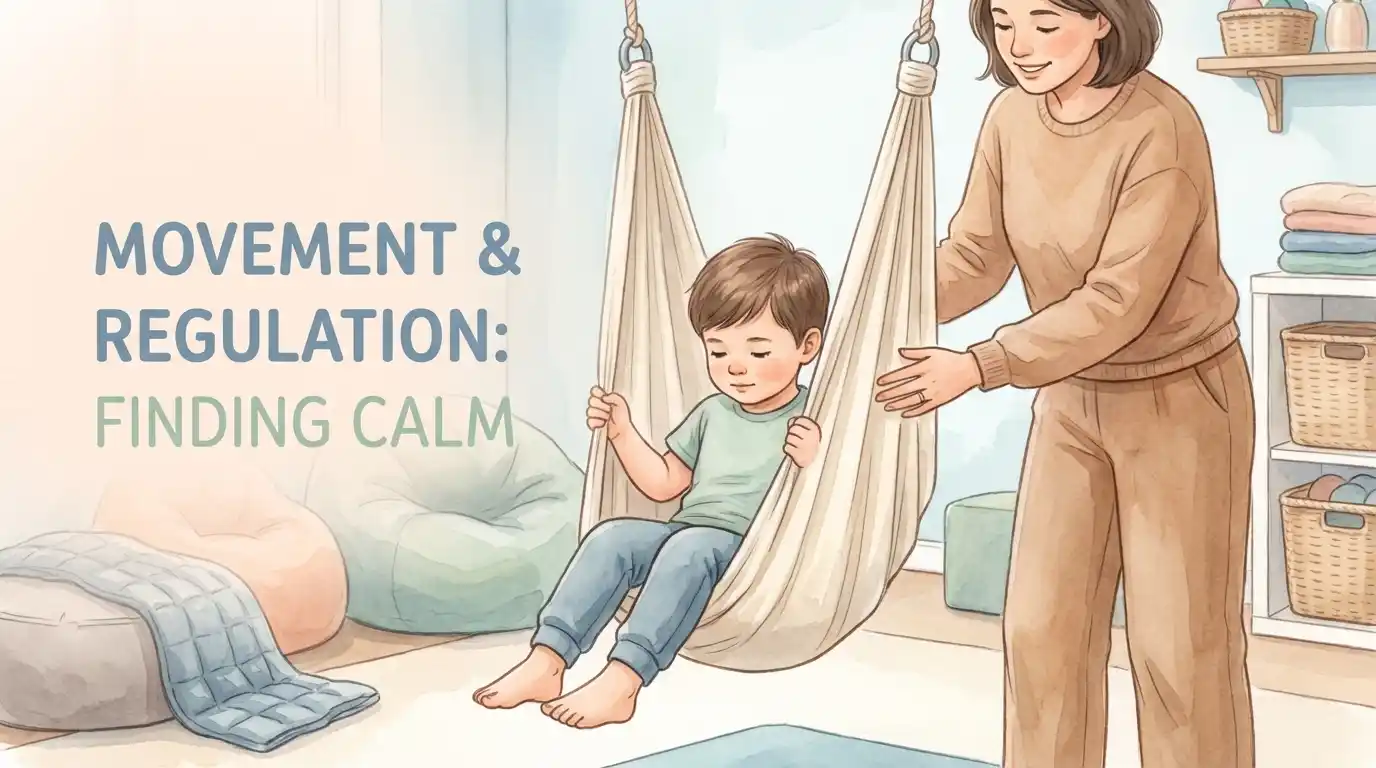
Swinging provides sustained, rhythmic vestibular input. For ADHD, linear swinging (back and forth) tends to be most organizing. Spinning is more alerting and should be used cautiously.
How to use it:
- 10-15 minutes of swinging before homework or focus tasks
- Slow, rhythmic swinging for calming
- Let the child control the pace when possible
For home swings, see our recommendations for sensory swings.
Balance Activities
Balance challenges force the vestibular system to engage and organize.
Options:
- Balance boards and wobble cushions
- Standing on one foot
- Walking along lines or curbs
- Obstacle courses that include balance elements
- Yoga or martial arts
Start with supported balance activities if your child struggles, and progress as they improve.
Movement Breaks
Short bursts of movement can reset the nervous system throughout the day.
Ideas:
- Jumping jacks or jumping on cushions
- Bouncing on an exercise ball
- Running in place or quick outdoor sprints
- Climbing (playground equipment, indoor climbing)
- Spinning briefly with supervision
Movement breaks work best when built into the schedule—not used as rewards or punishments.
No-Equipment Options
Many vestibular activities require nothing but space.
Try:
- Rocking back and forth while seated
- Rolling across the floor
- Log rolling (body straight, rolling like a log)
- Crawling in different positions (bear walk, crab walk)
- Animal movements (frog jumps, bunny hops)
For a complete list, see our guide to vestibular activities without equipment.
When to Use Vestibular Input
Timing matters as much as the activity itself.
Before Focus Tasks
Use vestibular input 10-15 minutes before:
- Homework
- School (if morning routine allows)
- Therapy sessions
- Testing or challenging cognitive tasks
The goal is to organize the nervous system before it's needed for focused work.
During Transitions
Transitions are often dysregulating for children with ADHD. A brief movement break between activities can help:
- After school before homework
- Between subjects or tasks
- Before leaving for appointments or activities
Even 2-3 minutes of purposeful movement can make a difference.
For Calming
When your child is overstimulated or dysregulated:
- Use linear movement (rocking, slow swinging)
- Avoid spinning—it's alerting, not calming
- Combine with proprioceptive input (weighted blanket, compression pajamas)
Gentle vestibular input before bed can also support the transition to sleep—but keep it calm and slow. For a complete approach to sensory-supported sleep, see our guide to sleep and bedtime sensory solutions and bedtime routines for sensory seekers.
What to Avoid
Some approaches backfire:
- Too much spinning close to focus tasks—spinning is alerting and can increase dysregulation
- Forcing movement when your child resists—follow their lead
- Expecting immediate results—effects build over time with consistent use
- Using movement as punishment—removing recess for behavior, for example, often worsens ADHD symptoms
Vestibular Equipment for ADHD
Swings
Swings provide the most consistent vestibular input at home.
Best types for ADHD:
- Pod or compression swings: Enclose the body, adding calming proprioceptive input—the Harkla Sensory Swing is a top choice
- Platform swings: Allow multiple positions and movement types
- Hammock swings: Good for relaxation and gentle rocking
See our recommendations for sensory swings for specific products.
Balance Equipment
Balance tools engage the vestibular system actively:
- Balance boards: Rocker and wobble styles—the Kinderfeets Kinderboard is versatile and durable
- Wobble cushions: Can be used on chairs for seated balance challenges
- Therapy balls: For sitting, bouncing, or balance activities
- Mini-trampolines: For jumping with controlled bounce
For balance board options, see our guide to balance boards for kids.
Practical Considerations
When adding equipment:
- Start with one piece and observe your child's response
- Doorway swings work for renters and small spaces
- Build over time based on what helps—not based on what looks impressive
- Prioritize safety—proper installation, weight limits, supervision
Working with Professionals
When to Consult an Occupational Therapist
Consider a professional evaluation if:
- Your child has severe balance or motor coordination issues
- You're uncertain about your child's sensory profile
- Home activities don't seem to help after consistent effort
- You want individualized recommendations
An OT can assess your child's specific vestibular function and create a targeted plan.
What Vestibular Therapy Looks Like
Professional vestibular therapy typically includes:
- Swings in various configurations
- Balance and coordination activities
- Movement games targeting specific skills
- Integration with other sensory approaches
Vestibular therapy is often part of broader sensory integration therapy, not a standalone treatment. It's usually combined with proprioceptive activities and other supports.
Frequently Asked Questions
Can vestibular therapy replace ADHD medication?
No. Vestibular therapy is a complementary approach, not a replacement for medication or other treatments. Research on vestibular input for ADHD shows benefits, but it's not a cure. If your child takes medication, vestibular activities can work alongside it—not instead of it.
How long before seeing results?
Some children show immediate improvements in focus after vestibular input. Longer-term changes in motor skills and regulation typically require consistent practice over weeks to months. The key is regular, daily vestibular input rather than occasional long sessions.
Is vestibular therapy safe for all children with ADHD?
For most children, yes. However, some children are hypersensitive to movement and may become overwhelmed. Start slowly, watch for signs of distress, and follow your child's lead. If your child has seizure disorders or other medical conditions, consult your doctor first.
How is this different from just playing?
The difference is intentionality. Free play naturally includes vestibular input, but structured vestibular activities are targeted and timed. Using swinging specifically before homework to support focus is different from incidental playground time—though both have value.
Should I get an OT evaluation first?
It's not strictly necessary for basic home activities. Swinging, rocking, and balance activities are generally safe for any child. However, if you're seeing limited results or want a customized plan, an OT can provide valuable guidance.
Conclusion
The vestibular system plays a larger role in ADHD than most parents realize. Research consistently shows that many children with ADHD have measurable vestibular differences—and that targeted vestibular input can improve attention, reduce hyperactivity, and support motor coordination.
This doesn't mean vestibular therapy is a cure. It's one piece of a larger puzzle that may include medication, behavioral strategies, educational support, and other interventions. But it's an accessible, low-risk piece that parents can implement at home starting today.
The approach is simple: provide organized vestibular input before focus tasks, during transitions, and as part of daily routine. Use swinging, rocking, bouncing, and balance activities consistently. Observe what helps your child specifically.
For equipment recommendations, see our guide to sensory swings or explore our complete vestibular guide for the full range of vestibular equipment options.
Your child's nervous system is asking for something. Vestibular input may be part of the answer.